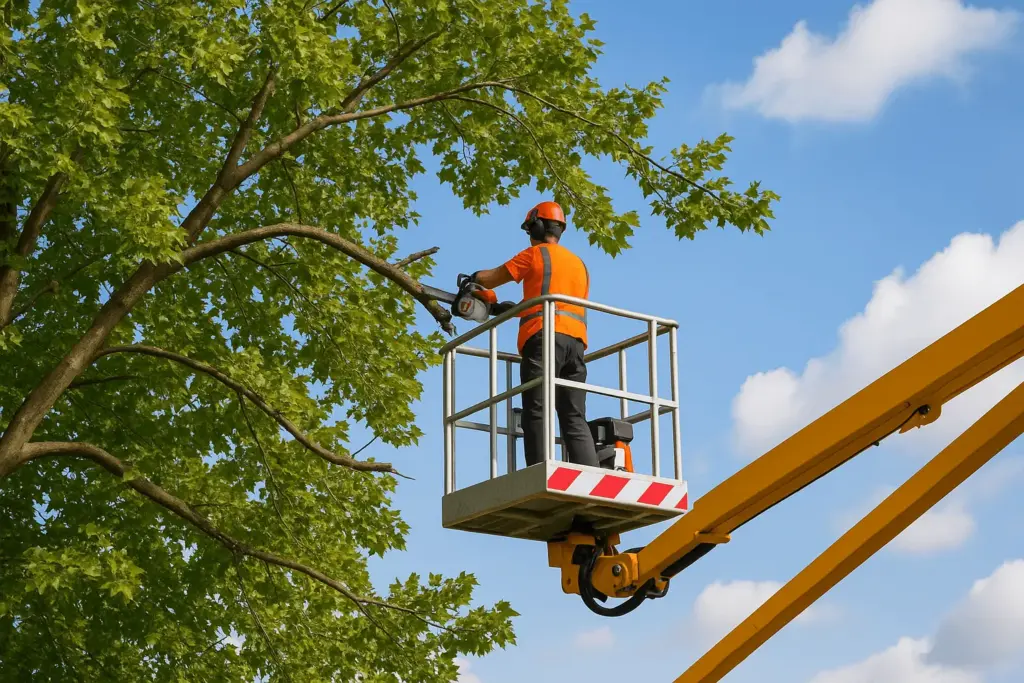
Quick answer: In Ohio, maples can be trimmed in the late dormant season (late winter, before the buds open) or after the leaves have fully opened in late spring or early summer. Late-winter cuts usually drip sap. University extension services say that sap loss does not harm the tree, so the choice is mostly about whether the dripping bothers you.
A maple cut in late winter can run with sap, and that makes many owners think they picked the wrong time. This guide explains what the sap flow means, which windows work, and when to hold off. If you would rather hand the job over, see our maple trimming in Toledo.
When is the best time to trim a maple in Ohio?
There are two workable windows, and each has a trade-off.
| Window | Sap flow | What the sources say |
|---|---|---|
| Late winter, before buds open | Likely | Best season for most pruning. Bare branches show the structure. |
| Late spring to early summer, leaves fully open | Little or none | The window to choose if you want to prevent bleeding. Keep the pruning light. |
| Mid-summer or late fall | Avoided | Listed by Purdue as other options that avoid sap bleeding. |
| Any time | Varies | Dead, weak or diseased limbs can come off whenever you find them. |
University of Minnesota Extension calls the late dormant season best for most pruning, because fresh wounds are exposed for only a short time before new growth starts to seal them. For trees with free-flowing sap, it says to wait until the leaves are fully expanded if you want to prevent bleeding. For other species, see our guide to when to trim trees in Ohio.
Why do maples drip sap after late-winter cuts?
Late winter is when maple sap is on the move. An article on Ohio State University’s Erie County Extension site points out that sugar maples are tapped for syrup in mid to late winter, and that most maples pruned in winter or early spring are sure to bleed. A pruning cut opens the same flow that a tap does.
Maples are not alone. The Minnesota guide puts butternut, walnut, birch, ironwood and blue beech in the same group.
Does the sap flow harm the tree?
No, according to the extension sources we checked. Iowa State University Extension says the loss of sap does not harm the tree, that trees will not bleed to death, and that the flow slows and stops on its own.
The International Society of Arboriculture (ISA) says much the same in its Pruning Mature Trees brochure: maples and birches may bleed if pruned early in spring, which may look unsightly but matters little to the tree. The real cost is a wet trunk and drips under the cut.
When should you hold off?
Two periods call for caution:
- As spring arrives. The Erie County article, written heading into spring, advises against pruning maples at that point.
- Right after the spring growth flush. ISA advises against heavy pruning of live tissue just after the flush, especially on weak trees, because the tree has just spent energy on new foliage.
That is why summer work on a maple should be light. Broken or dead limbs are the exception. ISA notes that routine removal of weak, dead or diseased limbs can be done at any time of year with little effect on the tree.
How much can you remove at one time?
Less than most people expect. For maples and the other sap-bleeding trees, University of Minnesota Extension says never to remove more than one quarter of the live foliage. ISA gives a similar general limit of no more than 25 percent of the crown at once, and less for mature trees.
The reason is simple. Leaves make the sugars a tree lives on, and ISA describes heavy pruning as a significant stress on its health. Cutting the whole top off to make a maple shorter is a different thing altogether, and our guide explains why topping harms trees.
Does the type of maple change the timing?
Not for sap. The Minnesota guidance covers all maples, including boxelder.
Silver maple deserves extra attention for a different reason. Purdue Extension, citing The Morton Arboretum, says its weak wood and branch structure mean limbs can break in strong wind and ice unless the tree is pruned regularly. For any large maple near a house, ISA advises leaving work above the ground or with power equipment to a professional arborist.
Maple trimming FAQs
Can you trim maple trees in summer in Ohio?
Yes. Pruning after the leaves have fully expanded in late spring or early summer is the timing University of Minnesota Extension gives for preventing sap bleeding, and Purdue names mid-summer as another option. Keep within the one-quarter foliage limit.
Should you seal a maple cut that is dripping sap?
No. ISA says research shows wound dressings do not reduce decay or speed up wound closure, and most experts recommend against them. The sap flow stops by itself.
Can you trim a maple tree in the fall?
Purdue lists late fall as a time that avoids sap bleeding on maple, birch and dogwood. Dead or broken limbs can be removed in any season.
Sources
- University of Minnesota Extension: Pruning trees and shrubs
- Ohio State University, Erie County Extension site: Why Do Trees Bleed?
- Iowa State University Extension: Sap is flowing from a pruning cut on my maple tree
- International Society of Arboriculture: Pruning Mature Trees
- Purdue Consumer Horticulture: Late Winter Recommended for Pruning Chores
- Purdue Extension Forestry and Natural Resources: Intro to Trees of Indiana, Silver Maple

PK Barmon researches and writes the tree care guides on Tree Services Toledo Ohio. Every guide is built from primary sources such as Ohio State University Extension, the City of Toledo and Ohio state agencies, and each one lists its sources so you can check them.