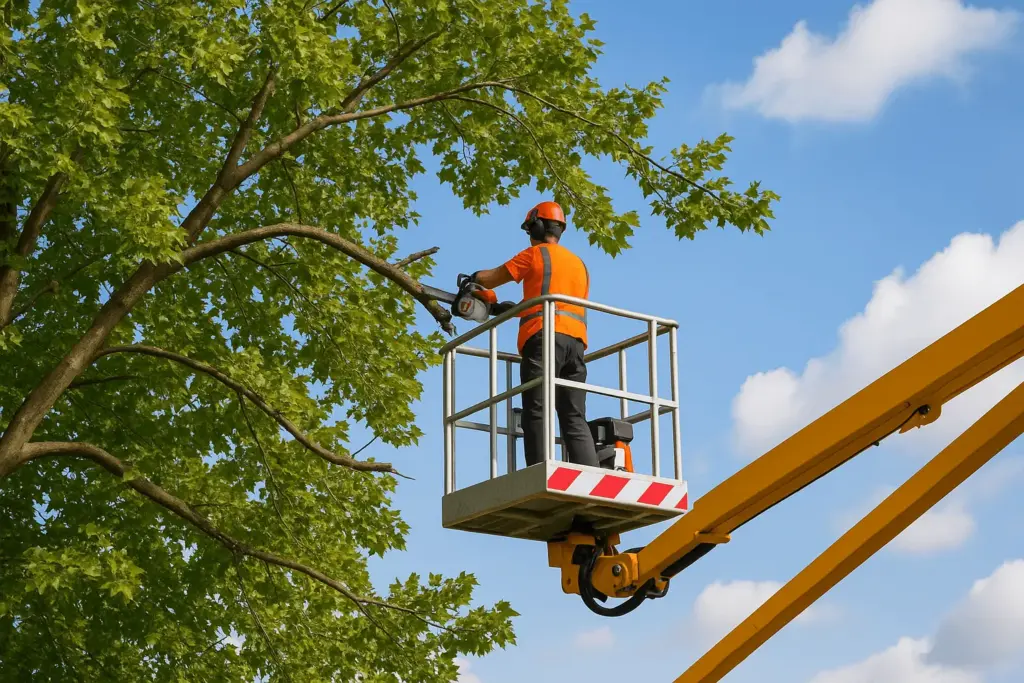
Quick answer: Do not read much into which word is on a tree quote. The industry standard for cutting branches, ANSI A300, calls the work pruning. Where people draw a line, trimming means cutting growth back to hold a shape, and pruning means removing chosen branches for a stated reason such as dead wood, weak structure or clearance.
You may see both words on estimates around Toledo, sometimes on the same page. This guide explains what each one means, which pruning types a quote may name, and what to ask before you sign. For the service itself, see tree trimming and pruning in Toledo.
What does tree trimming mean?
Trimming is the everyday word for cutting a plant back so it looks tidy or stays a certain size. An Idaho Department of Lands article on the two terms treats trimming as another name for shearing: taking off unwanted growth without choosing individual branches, to force a shape. It ties that kind of cutting to hedges, and says trees should be pruned.
Shearing has side effects even on shrubs. University of Maryland Extension notes that sheared plants lose their natural shape, and it advises against shearing a plant more than once a year.
On a tree, cutting the whole top back to a line is not maintenance. It is called topping, and the pruning standard lists it among practices that are not acceptable and can injure trees. Our guide explains why topping harms trees.
What does tree pruning mean?
Pruning is selective. Each branch is chosen and removed for a reason, and the cut is placed just outside the branch collar instead of flush with the trunk. The International Society of Arboriculture (ISA) states the principle in its Pruning Mature Trees guide: no branch should come off without a reason.
The ANSI A300 pruning standard, as summarized by the Tree Care Industry Association, starts from objectives. The ones it recognizes include managing risk, managing health, developing structure, providing clearance, managing size or shape, and improving appearance. A good quote names the objective first, then the cuts.
Pruning vs. trimming side by side
| Point | Trimming (shearing) | Pruning |
|---|---|---|
| Purpose | Hold a shape or size | A stated objective: risk, health, structure, clearance, size or appearance |
| What is cut | Outer growth, cut to a line without choosing branches | Chosen branches, each cut back to the branch collar or to a side branch |
| Typical tools | Hedge shears or electric shears | Hand pruners, loppers and pruning saws |
| Timing | For shrubs, no more than once a year (University of Maryland Extension) | Light removal of dead, weak or diseased limbs at any time; other pruning is best before the spring growth flush (ISA) |
| Fits | Hedges and formal shrubs | Trees |
Pruning types a quote may name
ISA’s guide describes four techniques. Quotes often put the word “crown” in front of them.
- Cleaning: removing dead, dying, diseased, weakly attached and low-vigor branches.
- Thinning: reducing the density of foliage toward the edge of the crown to let more wind or light through. ISA now describes this as reducing density.
- Raising: removing lower branches to clear buildings, vehicles, pedestrians and views.
- Reduction: making the tree shorter or narrower by cutting back to side branches at least one-third the diameter of the stem being cut.
The same guide sets a general ceiling: no more than 25 percent of the crown should be removed at one time, and less than that on a mature tree.
Which one does your tree need?
Hedges and formal shrubs get trimmed. Trees get pruned. For a tree, start from the problem you want solved. Dead limbs over the driveway point to cleaning. Branches resting on the roof or hanging low over the sidewalk point to raising or reduction.
Then ask that the quote state the objective, the pruning type, the size of branches to be cut, and roughly how much of the crown will come off. That makes two quotes comparable whatever word is printed at the top. For typical figures, see tree trimming prices in Toledo.
ISA advises leaving any pruning that means working above the ground or using power equipment to a professional arborist.
Pruning vs. trimming FAQs
Is tree trimming the same as tree pruning?
For trees, treat the two as one service and read the description underneath. The standard that covers the work uses the word pruning, and its listed objectives include size, shape and clearance, which are the jobs people tend to call trimming.
What is the difference between tree pruning and tree trimming on a quote?
The word tells you little. What matters is whether the quote names specific branches or a pruning type, or just promises to cut the tree back. A quote that offers to take a set amount off the top without naming where each cut ends may be describing topping.
When is the best time to prune a tree in Toledo?
ISA says light, routine removal of dead, weak or diseased limbs can be done at any time, and that growth and wound closure are greatest when pruning is done before the spring growth flush. Oaks are the exception to plan around: Ohio State University Extension’s oak wilt fact sheet says oaks should never be wounded between April 15 and July 1.
Sources
- Tree Care Industry Association: ANSI A300 Standards, Part 1 Pruning
- International Society of Arboriculture (TreesAreGood): Pruning Mature Trees
- Idaho Department of Lands: Words Make a Difference, Trimming vs. Pruning
- University of Maryland Extension: Pruning Shrubs and Hedges in the Home Garden
- Ohio State University Extension: Oak Wilt (PLPATH-TREE-02)

PK Barmon researches and writes the tree care guides on Tree Services Toledo Ohio. Every guide is built from primary sources such as Ohio State University Extension, the City of Toledo and Ohio state agencies, and each one lists its sources so you can check them.